Elective Cataract Surgery Options Available Through the Hospitals
When a cataract is removed, the cloudy natural lens is replaced with a clear artificial lens called an intraocular lens (IOL). The lens you choose determines how much you rely on glasses after surgery. This guide explains all four lens options available at Clarity Eye so you can come to your appointment ready to ask the right questions.
What is a Cataract?
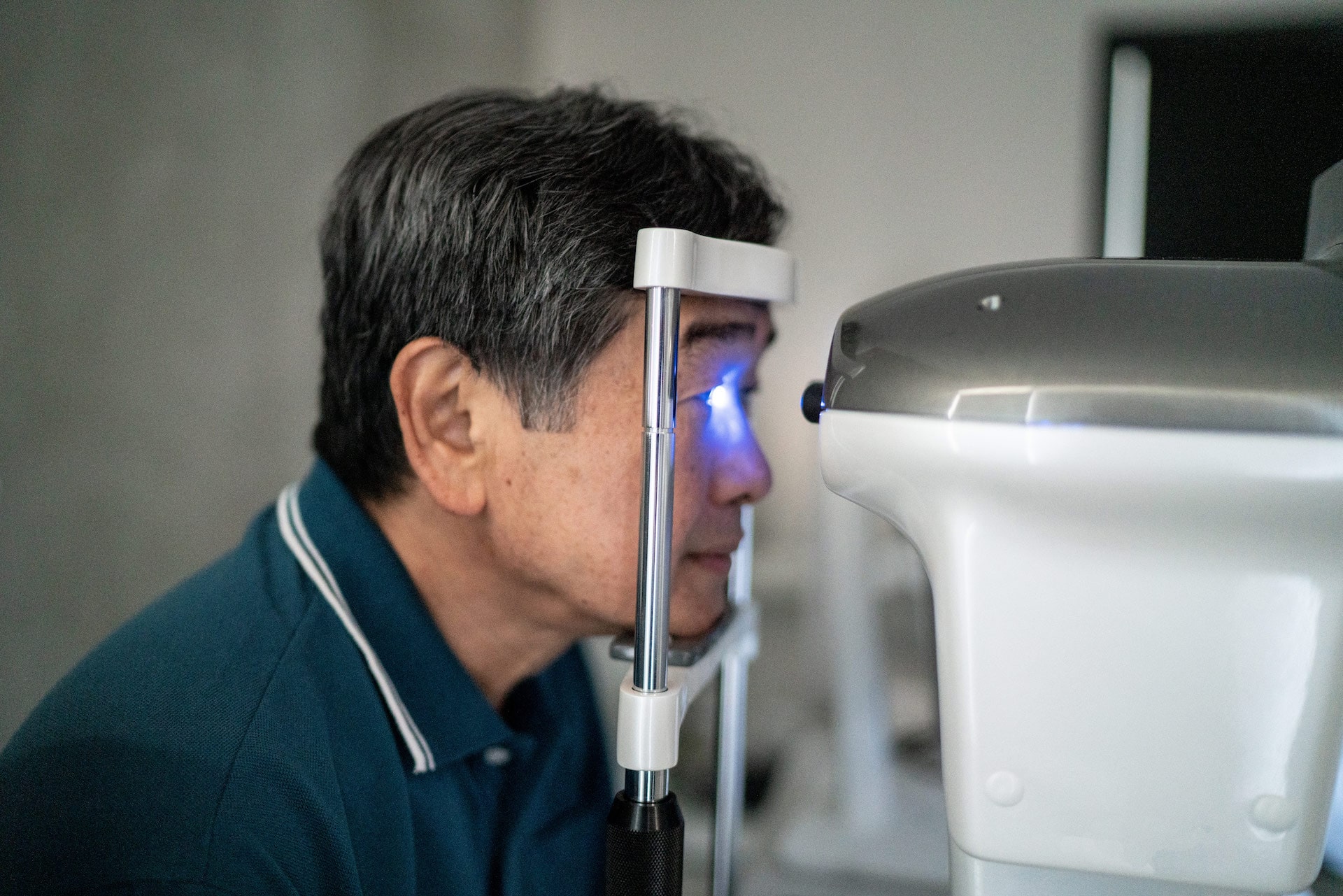
A cataract is a gradual clouding of the eye's natural lens — the structure that focuses light onto the retina. As the lens becomes cloudy, vision turns blurry, colours appear faded, and glare around lights increases, particularly at night. Cataracts are a normal part of aging and cannot be corrected with glasses. The only effective treatment is surgery, in which the cloudy lens is removed and replaced with a clear artificial intraocular lens (IOL). The procedure takes approximately 15–30 minutes, is performed under local anaesthesia, and most patients notice improved vision within days.
How Do You Use Your Vision?
Far Vision
Driving, TV, golf, recognizing faces across a room
Intermediate Vision
Computer, dashboard, cooking, shopping
Near Vision
Phone, books, medication labels, fine print
Four Lens Options — From Standard to Full Range of Vision
Monofocal
Monofocal
Lens
Lens
Lens
The Lens Options in Detail
Standard Monofocal Lens
OHIP covered · No additional cost
The standard monofocal lens corrects vision at one distance — typically set for far vision. It is safe, effective, and the most commonly used lens in Canada. You will need prescription glasses for reading, the computer, and other close tasks.
This is a fully valid choice. If you are comfortable continuing to wear glasses, this option provides excellent results at no cost to you.
What to expect after surgery
Computer vision: glasses expected
Reading vision: glasses expected
Aspheric Monofocal
Better optics · Less night glare · Additional costAn upgraded monofocal lens with advanced optical design that reduces glare and halos around lights at night compared to a standard lens. Like the standard monofocal, it corrects vision at one distance. This lens does not reduce your need for glasses — you will still wear prescription glasses for all distances. It is the right choice if you want the simplest outcome and better night-time visual quality.
Best for: patients comfortable wearing glasses whose main concern is optical quality and reduced night glare.
What to expect after surgery
Toric Lens
Corrects astigmatism · Clear distance vision · Additional costA toric lens is a premium monofocal lens with built-in astigmatism correction. If you have astigmatism — an irregular corneal shape that blurs vision at all distances — a standard lens cannot fully correct it. The toric lens addresses this at the time of surgery, giving sharper distance vision without glasses.
You will still need glasses for the computer and reading, as the lens corrects one distance only. If you do not have significant astigmatism, this lens is not indicated.
If the distance result needs fine-tuning after surgery, a LASIK touch-up may be considered.
What to expect after surgery
EDOF Lens (Extended Range)
Distance + computer · Lower glare · Additional costAn EDOF (extended depth of focus) lens stretches the visual range to cover far and intermediate distances — driving, TV, computer, and dashboard — reducing the need for glasses in most daily activities. Reading glasses may still be needed for fine print unless one eye is set slightly closer (mini-monovision).
Trade-off: some patients notice mild glare or halos around lights at night, though typically less than with a trifocal lens. A good option for frequent night drivers who want reduced glasses dependence.
If astigmatism is present, a toric version of this lens may be used.
What to expect after surgery
Trifocal Lens (Full Range)
Far, computer and reading · Maximum independence · Additional costA trifocal lens is designed to give useful vision at far, intermediate, and near distances — driving, computer, reading, and most daily tasks — making it the most glasses-independent option when the eye is a good candidate.
Trade-off: increased likelihood of glare or halos around lights at night compared to monofocal and EDOF lenses. Best suited to patients who drive little at night or can accept this trade-off for greater freedom from glasses.
If astigmatism is present, a toric version may be used.
What to expect after surgery
DOWNLOAD THE CATARACT SURGERY OPTIONS GUIDE
Interested in more options that may reduce your need for glasses? Learn more about refractive surgery.
Quick Comparison
| Lens | Far | Computer | Reading | Night glare risk |
|---|---|---|---|---|
| Standard Monofocal | May need glasses | Glasses needed | Glasses needed | Neutral |
| Aspheric Monofocal | May need glasses | Glasses needed | Glasses needed | Reduced ✓ |
| Toric Lens | Expect no glasses ✓ | Glasses needed | Glasses needed | Reduced ✓ |
| EDOF Lens | Expect no glasses ✓ | Expect no glasses ✓ | May need readers | Mild |
| Trifocal Lens | Expect no glasses ✓ | Expect no glasses ✓ | Expect no glasses ✓ | Higher possible |
Results vary by individual. Your prescription, astigmatism, eye health, and lifestyle all influence which lens is appropriate. Your consultant and care team will confirm the safest and most realistic option for your eyes.
Before Your Appointment — Three Questions to Consider
01
How important is it to reduce your dependence on glasses in daily life?
02
How much do you drive at night? Glare and halos matter more for frequent night drivers.
03
Which distance matters most — driving, computer, reading, or a mix?